Ever since I visited Andalusia in Spain in 2022 and Turkey at the end of 2023, I have wanted to explore more of the Islamic world. The architecture, the languages, the friendly people and the flavorful food were some of many aspects that drew me towards dreaming about Morocco.
I travel solo fairly often, but I figured traveling in Morocco and seeing different parts of the country would be way more efficient if I joined a tour group. Plus, it is such a great way to meet new people, especially other travelers around the world. I had been eyeing Intrepid Travel and their trips for a while. It’s a travel company based in Australia that promotes adventurous and environmentally conscious ways to travel. I was sold after looking at the 15-day Morocco itinerary, excited to escape the dreary Seattle winter for a somewhat warmer North African one 🙂
Chefchaouen: “The Blue Pearl”
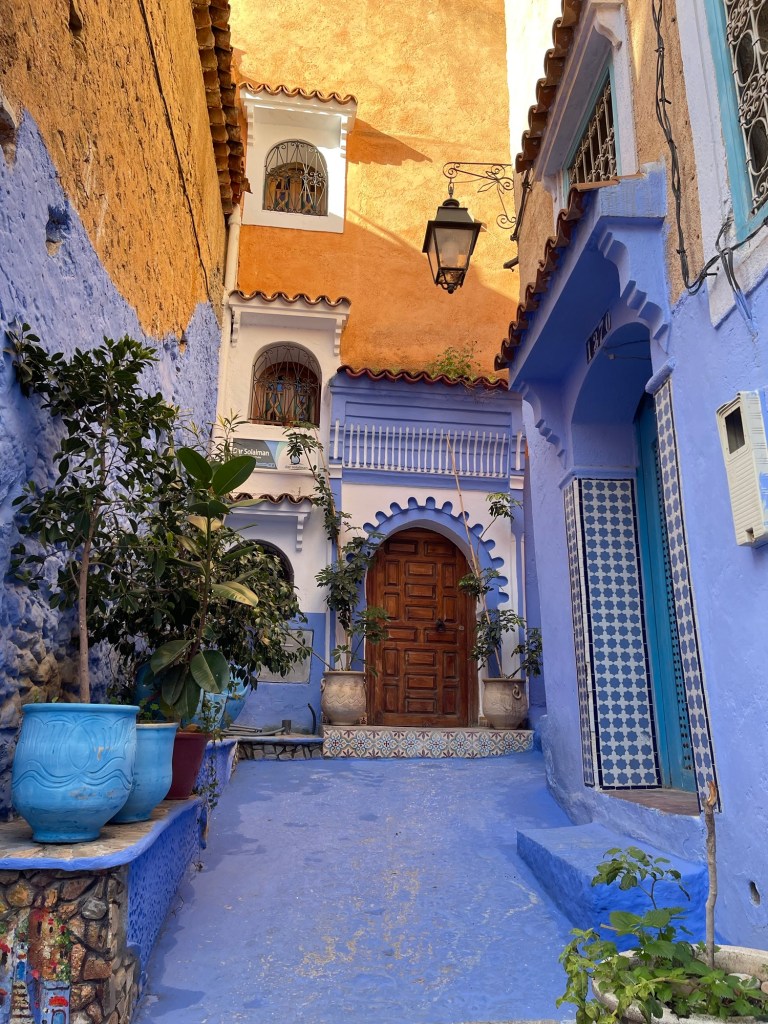
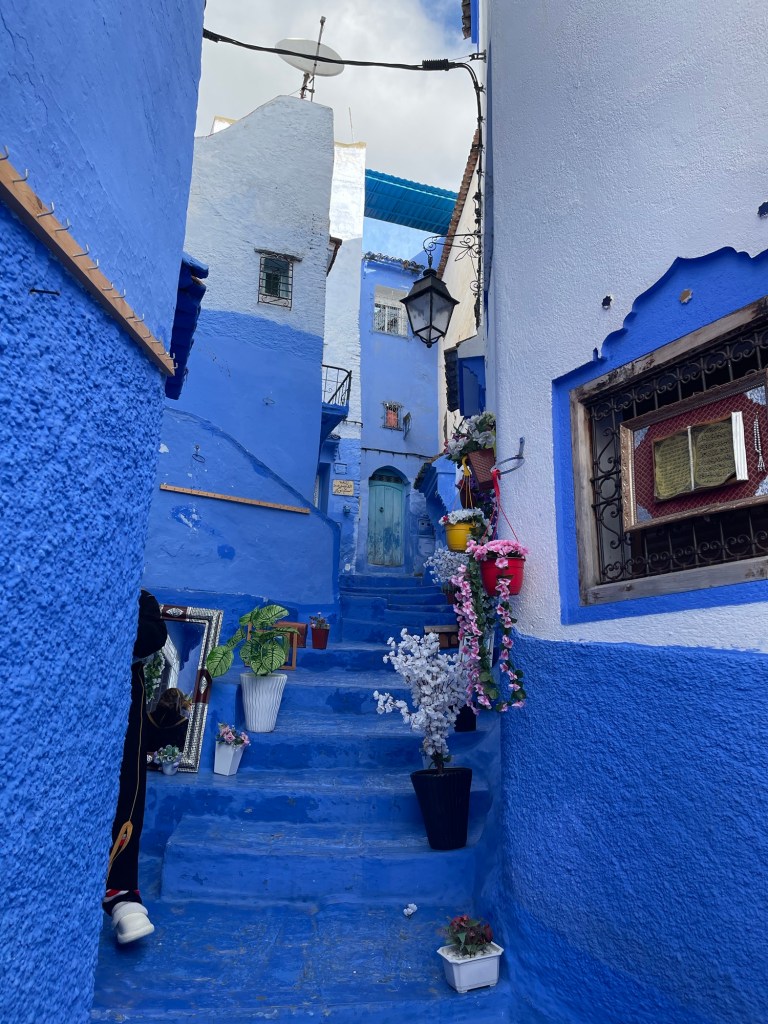
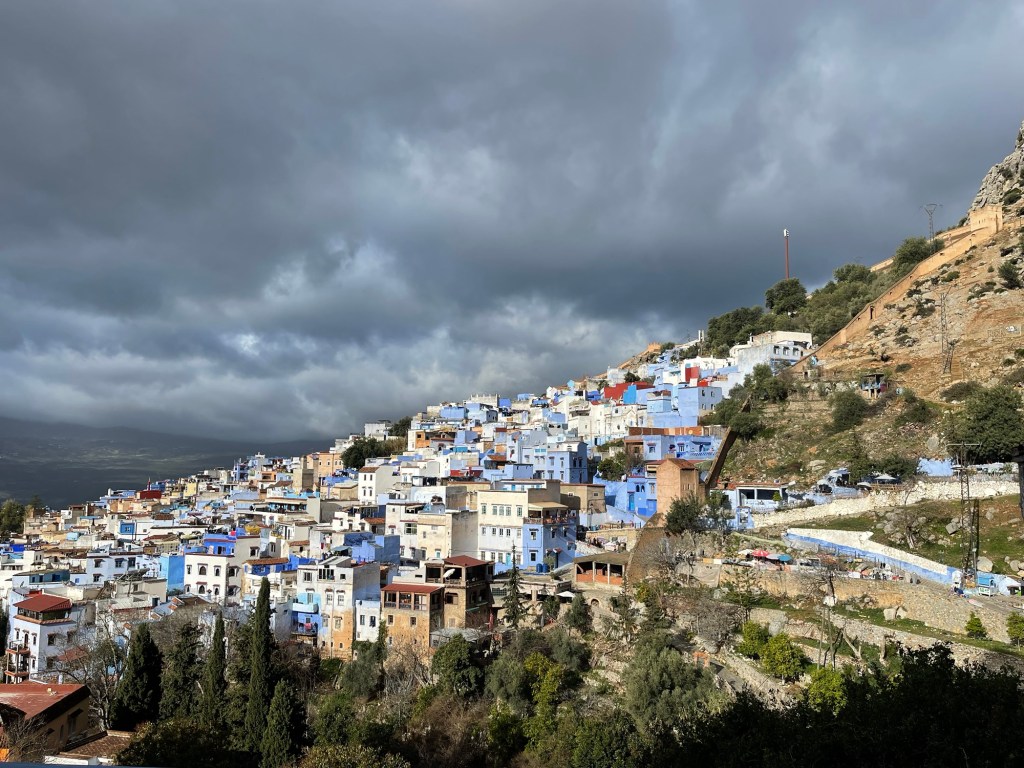
Within the first couple of days of our trip, we traveled to the Blue City of Chefchauen, one of Morocco’s most highlighted tourist attractions and for good reason. Chefchaouen is situated in a mountainous region of northern Morocco and it was founded in 1471. The name of the city comes from the Arabic language where “chef” means “to look” and “chaouen” means “antlers” or “horns” because of the two protective horns of the Rif Mountains that loom above the city. The Medina or the city center is filled with blue and white buildings and many of the residents adorn their homes with potted flowers and plants, which makes it that much more appealing.
On our second day in Chefchaouen, we walked around the alleyways of the “The Blue Pearl” city, sipping on fresh orange juice and purchasing cool souvenirs to take back home with us. We also did a small hike uphill to the Spanish mosque or the ‘Bouzafer’ that sits above the city. Once at the top, the view of the city with its blue and white hues is mystifying. It’s a city that is worth a second, third or even a fourth visit 😉
Volubilis – Roman Ruins
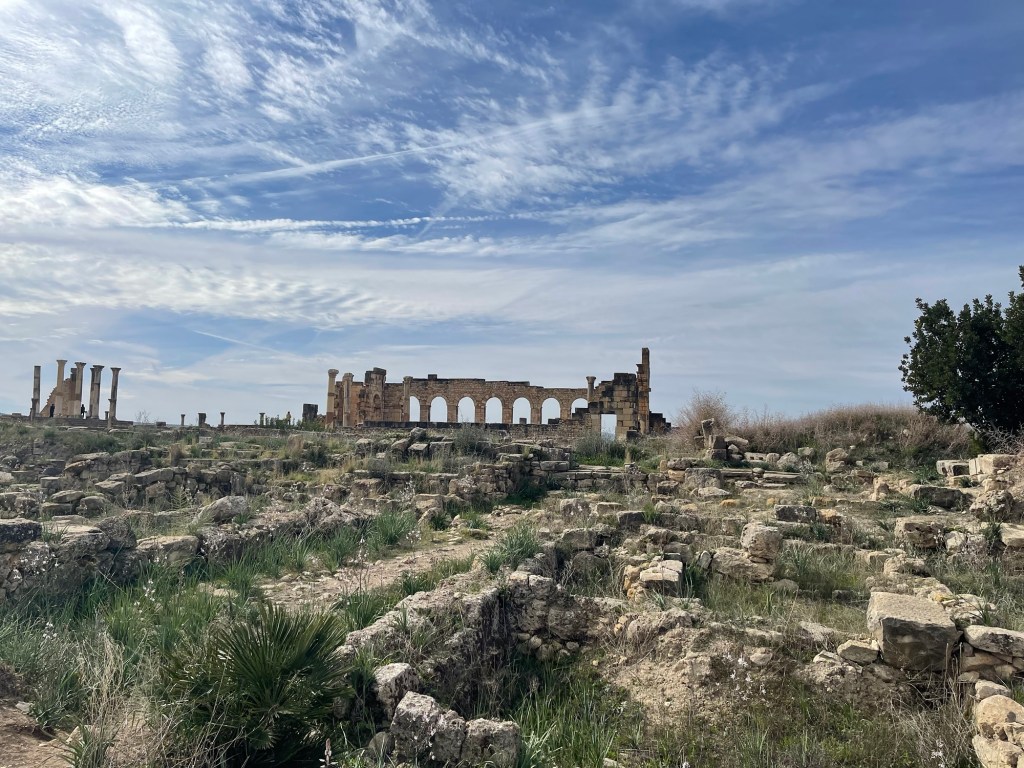
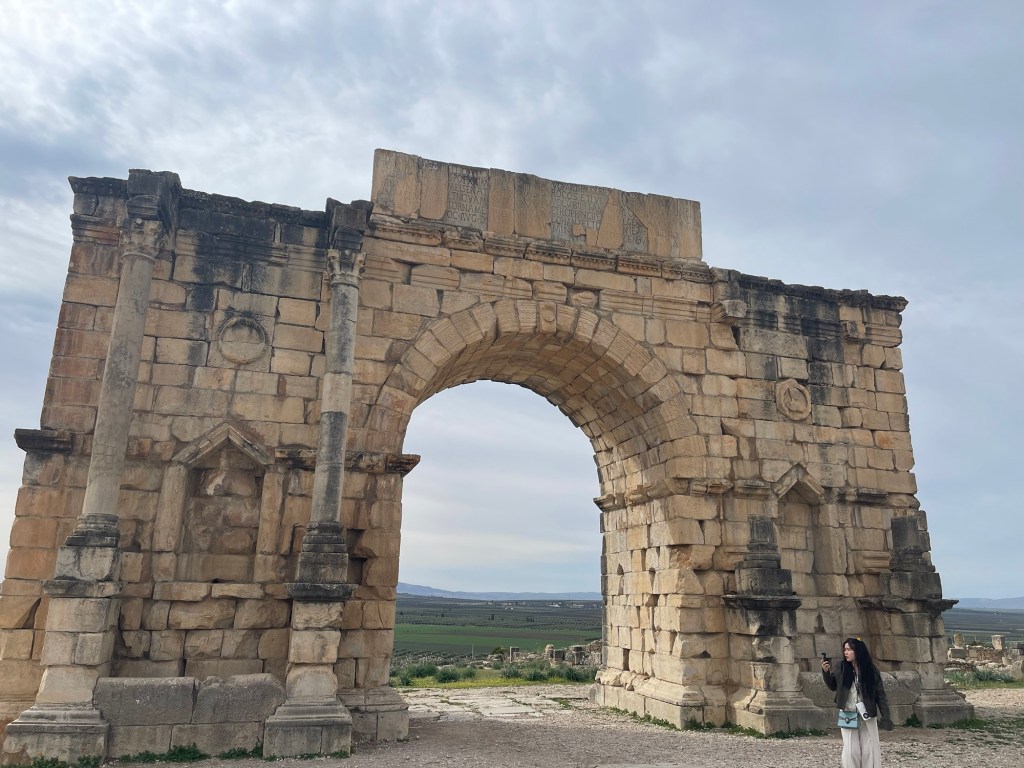
On our third full day in Morocco, we were driven from Chefchaouen to Volubilis (about a 3 hour drive) where we were surprised by Roman ruins and an informational tour of them by a local guide. Volubilis is a Berber-Roman city that is believed to have been the Kingdom of Mauritania hundreds of years ago. It grew under the Roman rule from the 1st century AD and consists of a basilica, temple and a triumphal arch. I honestly enjoyed the mosaics on the floor that have been excavated. The tour guide showed us that a little bit of water could illuminate the vibrant colors of the old tiles. One of the favorites was of a man riding backwards on a donkey!
Fes: The City of Universities and Tanneries
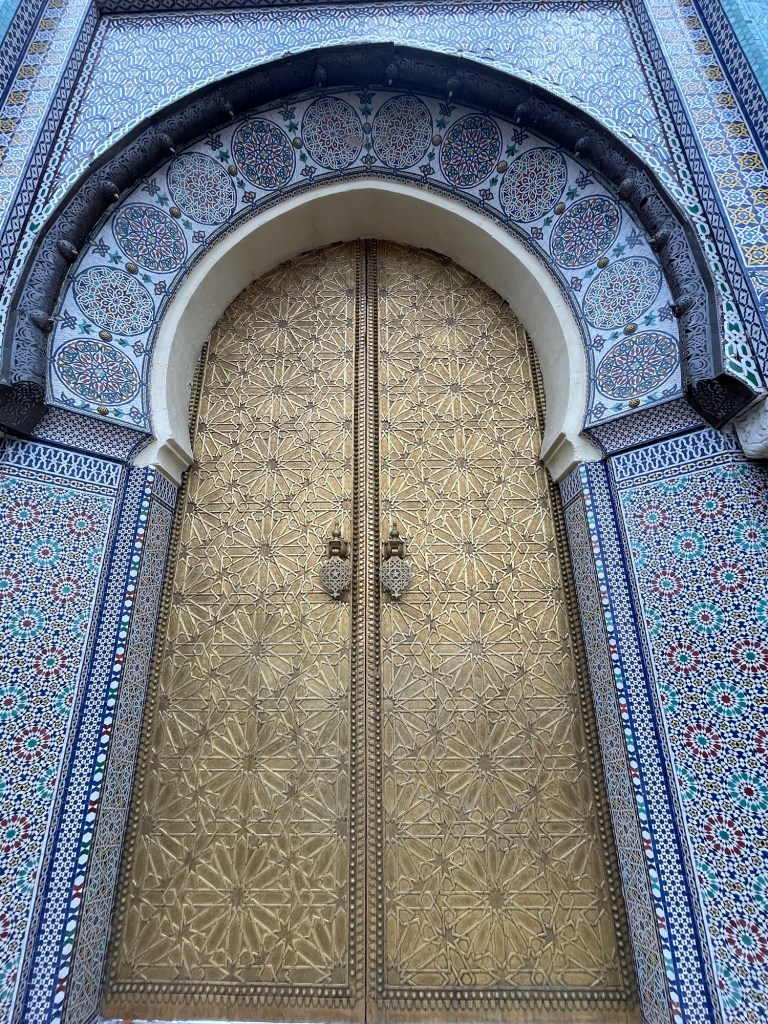
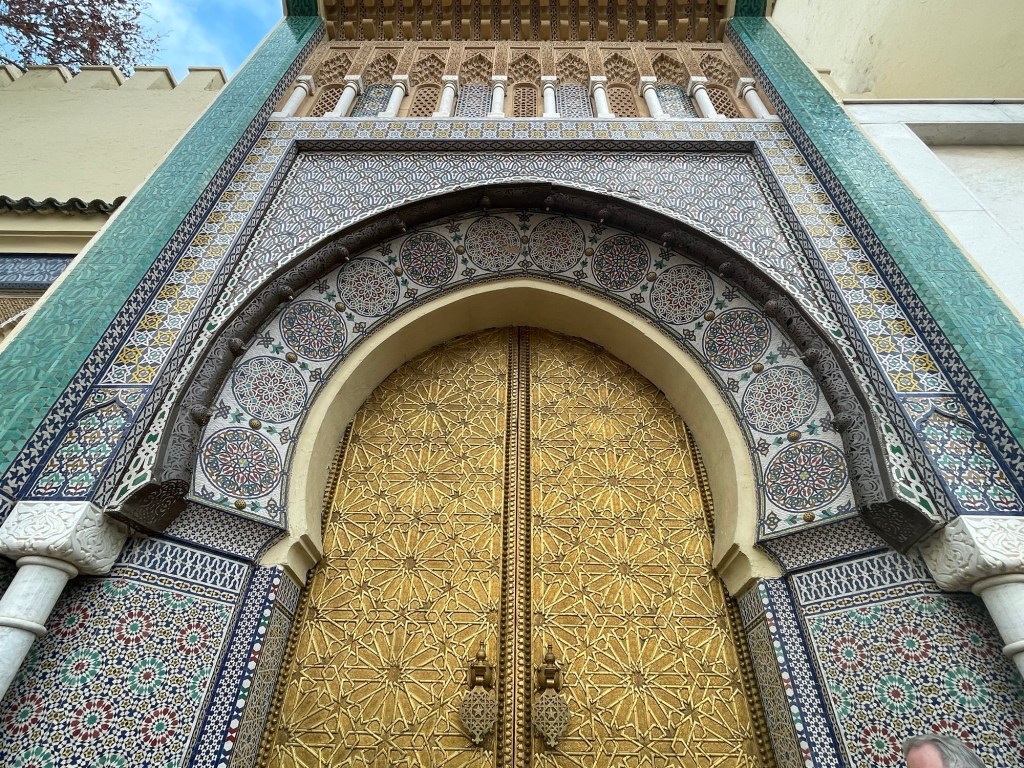
On the same day, we rode another 1 hr 30 minutes in our somewhat cramped shuttle van to the historical city of Fes where we were met by a local tour guide the next morning. She showed us beautiful panoramic views of Fes and pointed out famous universities and even one that she had attended a couple of decades ago. We had the chance to admire the royal family palace and its ornate doors, adorned with beautiful geometric designs in gold. The palace dates back to 1276 and is the residence of the King of Morocco throughout much of the year, and therefore it is not open to the public. However, despite that we were perfectly content just admiring the exterior architecture of the building!
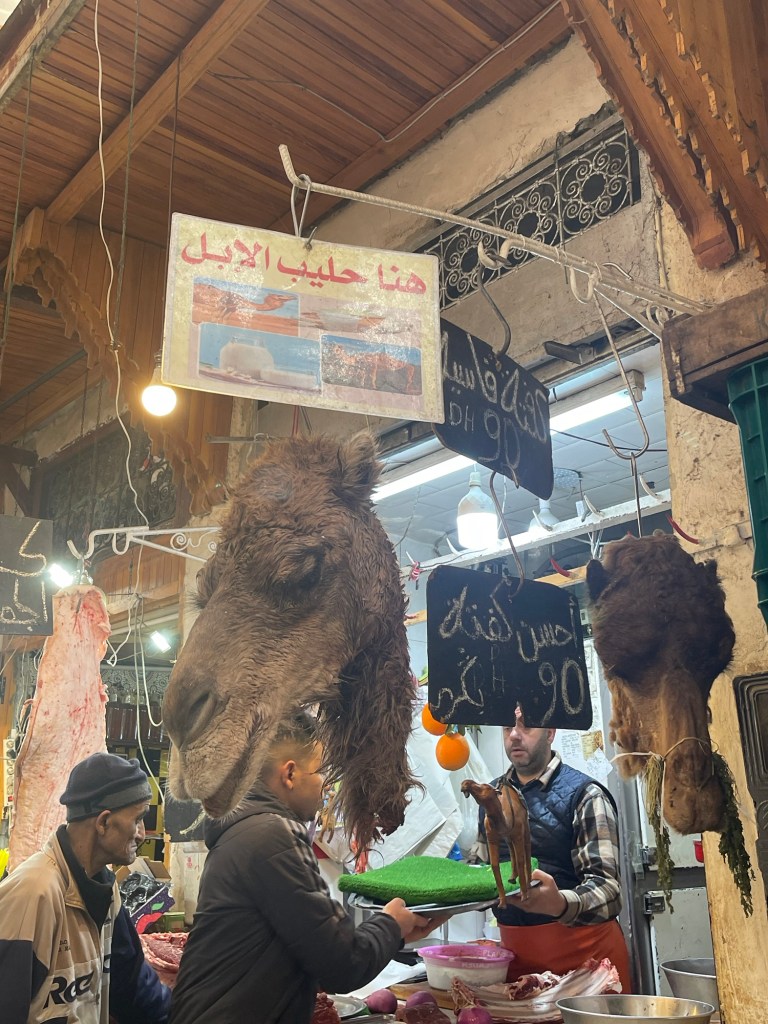
Later, our local guide walked us through the old, narrow alleyways of the Medina in Fes. We passed by shopkeepers selling all kinds of products—from spices, to jewelry to leather goods. One butcher shop even had a camel’s head hanging in the front of it to entice tourists to try camel meat. A leather tannery visit was next as one of the best leather in the world is produced in Fes. We were met with pungent and unpleasant smells of leather as the hides were in the process of being dyed and laid out to dry. The tannery employees greeted us with fresh mint leaves to carry around their store (as we admired their leather products) to offset the intense tannery smells, which was a nice touch.
We watched the tannery workers place the hides in huge vats of mixtures made up of cow urine, pigeon feces, salt and water. They used this mixture to clean and soften the hides, which takes 2-3 days. Then, they are placed in dyeing solutions with poppy used for the color red, indigo for blue and henna for orange. For the finishing touch, they are dried under the sun. We were told that after coal mining, working in the tannery was the second toughest job in the world!
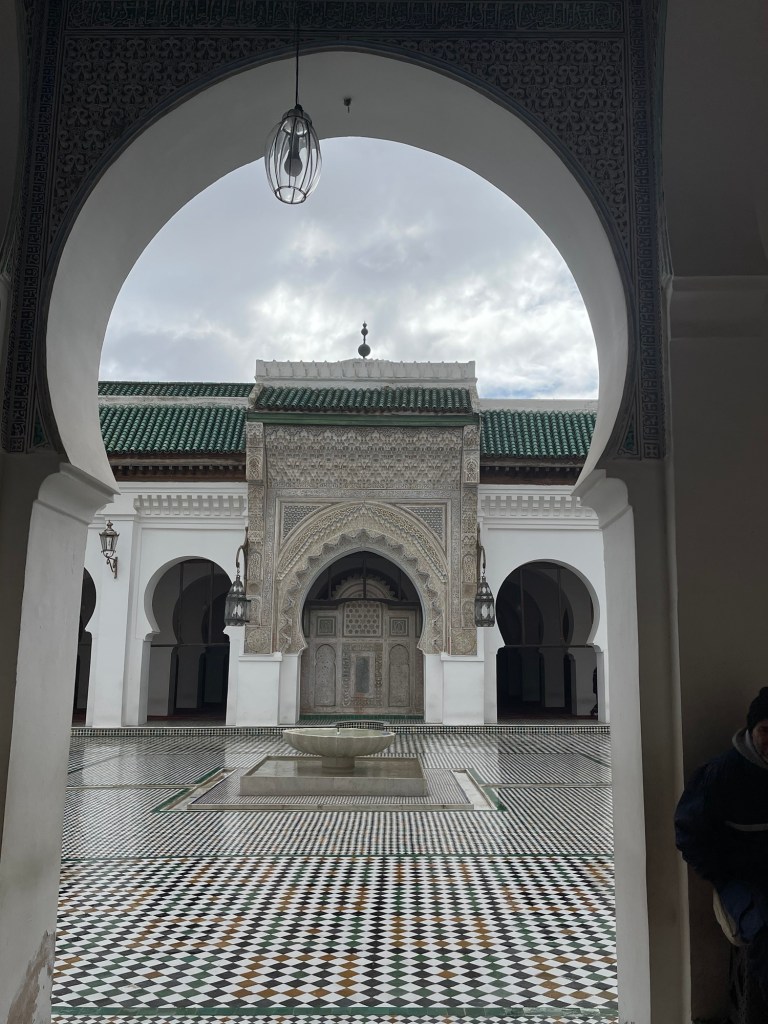
As the final stops, our local guide took us to the University of Al-Qarawiyyin that was founded by Fatima al-Fihri around 860 AD and was recognized as one of the leading spiritual and educational centers of the Islamic Golden Age. Students used to stay in the small dormitories of this university and we were able to take a sneak peek into the old rooms, imagining how life must have been during the 9th century. The university was the first educational institution to grant degrees and it primarily focused on Islamic religious and legal sciences. The female founders of the university were definitely ahead of their time!

 The Insightful Nomad
Your trip sounds amazing and some great photos
LikeLiked by 1 person
Thank you so much! There’s more to come 🙂
LikeLike