With the limited time I had in my favorite city during this trip to the motherland, I wanted to have at least one day to explore something new. I had often heard of elephanta caves (ancient caves of Hindu origin) from my family and relatives, so of course I went on a search to find out what it would entail.
This article may contain affiliate links and I may get a small commission if you click on the links and purchase the services, but this is at no extra cost to you. Thank you for supporting my content!
I often have two go-to’s when I’m searching for the perfect day tour in the specific city I’m visiting. I tried Viator.com first, but I found their prices to be too high for this day trip, so my second option was www. getyourguide.com. This website is great for anyone from walking tours to guided day trips with a knowledgeable tour guide. The Elephanta caves are a ferry ride away from the city and I knew I wanted a tour guide to explain the carvings we would see in the cave. I booked This guided group tour and I was far from disappointed.
I needed something economical for six people (including me) because I wanted to treat my family and my two family friends for the day on this trip. The tour ended up being $26 USD per person and would include a tour guide and the ferry ride to the island. Our meeting point was in front of Pizza Express at the Gateway of India, a famous architectural structure in the city that opens up to the Arabian Sea. We were joined by a French man and a German woman on the tour and I was really glad that the group was small and manageable.
Our first guide met us at the stated meeting point, led us to the ferry, helped us board and then introduced us to the second guide, Harish, who had been born and raised on the island and was therefore, a knowledgeable local. The ferry ride was a relaxing hour and 15 mins. It wasn’t the most ideal day to be on the island as it was blazing hot with the sun beaming down, screaming skin cancer, so remember that sunscreen and hats are a must! Harish walked us to the start of the steps that would then lead us to the caves, explaining that there were 120 stairs up to the caves that we would have to hike up.
On a normal day, this is a fairly easy to moderate task depending on your fitness level, but with the hot Mumbai sun and insane humidity, you could feel every step you took. For those that are not as physically capable, there is an option of paying extra to be carried up the stairs. Visitors can sit on a chair made of bamboo and are then carried up by four strong men. That way if you’re not game for the stairs, at least you have an alternative option and you can still see the caves in a more relaxed manner.
Up at the top, Harish led us to a restaurant to take a break. This included basking in the glory of the cooling fans and catching a view of the city. There are also tons of monkeys up top, so it was entertaining observing their many shenanigans, like stealing tourists’ water bottles! Once inside the caves, we were amazed with stellar stone carvings of the Lord Shiva. Harish informed us that the caves may have been as old as 1500 years, if not more. The caves were carved of basalt stone due to suspected volcanic activity in the past. The name “Elephanta” stems from elefante, which the Portuguese colonizers titled the caves as they found giant elephant statues inside of them upon arrival. Unfortunately, these elephant statues have been moved to different locations now. In addition, many of the Shiva statues were destroyed by invaders such as the British and Portuguese colonizers, who were obviously against deity worship due to the principles of Christianity and believed that by destroying the bottom foundations of the statues, the caves would eventually collapse. The foundation of the caves is so solid, however, that despite their destructive efforts, the caves still remain mostly intact to this date. It’s truly a site for sore eyes.

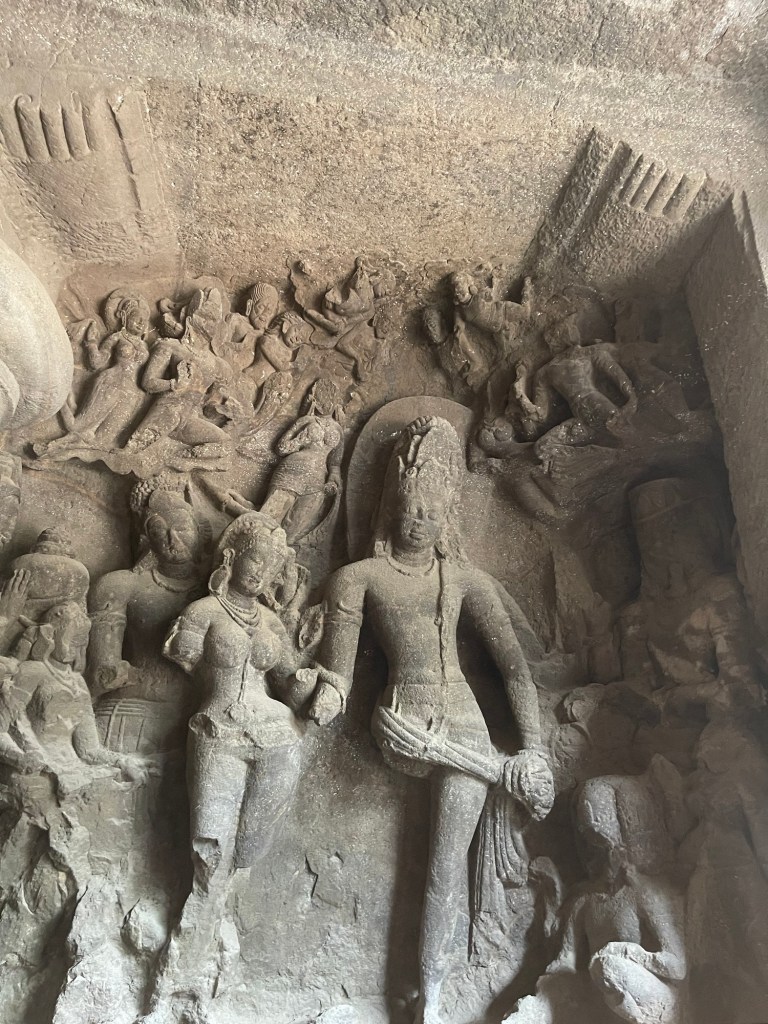
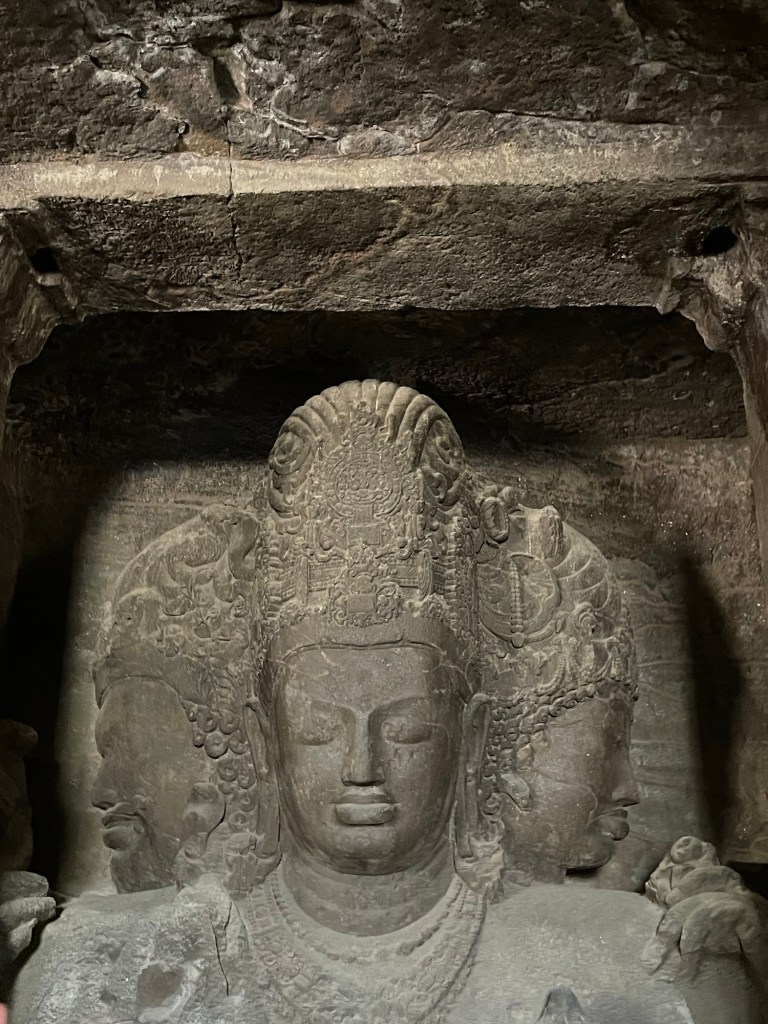
Various sides of the Lord Shiva are portrayed through the representation in the caves. For instance, the ‘trimurti,’ or the main Shiva carving that greets you in front right as you enter Cave 1, consists of three heads that represent three aspects of Shiva: creation, protection, and destruction. Another part of the Shiva carvings represent a half-Shiva and half-Parvati (his wife), highlighting their union in marriage. Yet another depiction demonstrates Shiva slaying the demon, Andhaka, or the ‘blind, darkness,’ representing his role as the destroyer of evil. All of the carvings are intricate and complex. Harish took his time to explain the significance of each of the nine Shiva carvings, leaving us in awe of the attention to detail.



After a thorough guided tour, Harish joined us for soft drinks to cool down and for conversation about his upbringing on the island and his experience working as a tour guide. He told us how he had to take a ferry to go to school every day when he was younger!
This tour was so well-organized and personalized, I highly recommend it if you want to see a small piece of history and religious significance in the vibrant city. It’s low-cost and great for travel photos. You won’t be disappointed!
 The Insightful Nomad